Difference between revisions of "Donkey Burger"
Tags: Visual edit: Switched Reverted |
([CFWK] Add brief Introduction above Origins) |
||
| (4 intermediate revisions by the same user not shown) | |||
| Line 1: | Line 1: | ||
{{Infobox chinese food|alternate_name=驴肉火烧|pinyin=Lǘ ròu huǒshāo|country=Hebei, China|region=Hebei|course=Snack|image=The Donkey Burger in Hefei.jpeg|caption=Donkey Burger|type=Crispy and soft|other= | {{#seo: | ||
|title=Donkey Burger 驴肉火烧 -Chinese Food Wiki | |||
|description=Donkey Burger is an extremely popular traditional snack in North China, originating from Baoding City, Cangzhou City and Dacheng County, Langfang City, Hebei Province. | |||
}} | |||
{{Infobox chinese food|alternate_name=驴肉火烧|pinyin=Lǘ ròu huǒshāo|country=Hebei, China|region=Hebei|course=Snack|image=The Donkey Burger in Hefei.jpeg|caption=Donkey Burger|type=Crispy and soft|other=Also called lürou huoshao / 驴肉火烧}} | |||
== Introduction == | |||
Donkey burger (驴肉火烧) is a Hebei street-food sandwich of stewed donkey meat in a crisp baked flatbread (火烧). | |||
== Origins == | == Origins == | ||
Donkey Burger is an extremely popular traditional snack in | Donkey Burger is an extremely popular traditional snack in North China, originating from Baoding City, Cangzhou City and Dacheng County, Langfang City, Hebei Province. | ||
Donkey Burger is widely spread in the central | Donkey Burger is widely spread in the central plain of Hebei. | ||
After the marinated donkey meat was added to the crispy fire-roast with the old soup, Donkey Burger has been developed and promoted, and finally became famous in the north and south of China. | |||
== Chinese == | == Chinese == | ||
Pinyin: Lǘ ròu huǒshāo | Pinyin: Lǘ ròu huǒshāo | ||
| Line 16: | Line 23: | ||
File:Donkey Burger.jpg|alt=Baoding Donkey Burger|Baoding Donkey Burger | File:Donkey Burger.jpg|alt=Baoding Donkey Burger|Baoding Donkey Burger | ||
</gallery> | </gallery> | ||
== Time of Invention == | == Time of Invention == | ||
According to historical records, the Donkey Burger originated from the Ming Dynasty (1400 AD). | According to historical records, the Donkey Burger originated from the Ming Dynasty (1400 AD). | ||
== Taste == | == Taste == | ||
Donkey meat is first stewed | Donkey meat is first stewed in a high fire and then in a warm fire, with nearly 20 kinds of seasonings, with long cooking time, thorough cooking, fresh color and tender, meat fragrant but not woody, long fragrance, crispy and soft. The medical book states that donkey meat is a tonic for blood, qi and deficiency. It can be seen that donkey meat is not only delicious, but also has health care functions. | ||
== Contraindications == | == Contraindications == | ||
Donkey meat is not suitable for pregnant women | Donkey meat is not suitable for pregnant women, people with a cold spleen and stomach, chronic intestinal inflammation and diarrhea. | ||
== Ingredients == | |||
''(Makes 4 burgers; donkey meat may be substituted with beef for a home approximation)'' | |||
* 400 g donkey meat (or lean beef), thinly sliced or shredded after cooking | |||
* 4 crispy huoshao / baked flatbreads (fire-baked rolls) | |||
* 2 slices ginger | |||
* 2 scallions | |||
* 2 star anise | |||
* 1 tsp Sichuan peppercorns | |||
* 2 tbsp light soy sauce | |||
* 1 tbsp dark soy sauce | |||
* 1 tsp sugar | |||
* Salt, to taste | |||
* Optional fillings: green pepper shreds, cilantro, savory bean paste | |||
== Recipe == | |||
# Blanch the meat, then braise with ginger, scallions, spices, soy sauces, sugar, and salt in enough water to cover. Simmer until tender (often 1.5 hours or longer for donkey meat). | |||
# Slice or shred the meat; keep moist with a little braising broth. | |||
# Warm the huoshao until the exterior is crisp. Split open and stuff with meat (and optional vegetables or sauce). | |||
# Serve hot. Baoding-style breads are typically round; some Hebei and Anhui versions use rectangular breads. | |||
== Related == | |||
* [[Hebei Food]] | |||
* [[Chinese Snack]] | |||
* [[Roujiamo]] | |||
For further reading, see the English Wikipedia overview.<ref name="wp">[https://en.wikipedia.org/wiki/Donkey_burger English Wikipedia]</ref> | |||
== See also == | |||
* [[Chinese Snack]] | |||
* [[Hebei Food]] | |||
* [[Roujiamo]] | |||
* [[Doubanjiang]] | |||
* [[Mapo Tofu]] | |||
* [[Sichuan Food]] | |||
* [[Types Of Taste]] | |||
== References == | |||
{{reflist}} | |||
Latest revision as of 17:39, 21 September 2026
|
Donkey Burger
|

Introduction
Donkey burger (驴肉火烧) is a Hebei street-food sandwich of stewed donkey meat in a crisp baked flatbread (火烧).
Origins
Donkey Burger is an extremely popular traditional snack in North China, originating from Baoding City, Cangzhou City and Dacheng County, Langfang City, Hebei Province.
Donkey Burger is widely spread in the central plain of Hebei.
After the marinated donkey meat was added to the crispy fire-roast with the old soup, Donkey Burger has been developed and promoted, and finally became famous in the north and south of China.
Chinese
Pinyin: Lǘ ròu huǒshāo
中文: 驴肉火烧
Differences
The most intuitive difference between the Donkey Burger in Hefei and the Donkey Burger in Baoding is that the Donkey Burger in Baoding is round, while the Donkey Burger in Hefei is rectangular.
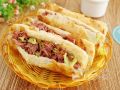
Hefei Donkey Burger
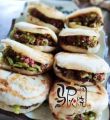
Baoding Donkey Burger

Time of Invention
According to historical records, the Donkey Burger originated from the Ming Dynasty (1400 AD).
Taste
Donkey meat is first stewed in a high fire and then in a warm fire, with nearly 20 kinds of seasonings, with long cooking time, thorough cooking, fresh color and tender, meat fragrant but not woody, long fragrance, crispy and soft. The medical book states that donkey meat is a tonic for blood, qi and deficiency. It can be seen that donkey meat is not only delicious, but also has health care functions.
Contraindications
Donkey meat is not suitable for pregnant women, people with a cold spleen and stomach, chronic intestinal inflammation and diarrhea.
Ingredients
(Makes 4 burgers; donkey meat may be substituted with beef for a home approximation)
- 400 g donkey meat (or lean beef), thinly sliced or shredded after cooking
- 4 crispy huoshao / baked flatbreads (fire-baked rolls)
- 2 slices ginger
- 2 scallions
- 2 star anise
- 1 tsp Sichuan peppercorns
- 2 tbsp light soy sauce
- 1 tbsp dark soy sauce
- 1 tsp sugar
- Salt, to taste
- Optional fillings: green pepper shreds, cilantro, savory bean paste
Recipe
- Blanch the meat, then braise with ginger, scallions, spices, soy sauces, sugar, and salt in enough water to cover. Simmer until tender (often 1.5 hours or longer for donkey meat).
- Slice or shred the meat; keep moist with a little braising broth.
- Warm the huoshao until the exterior is crisp. Split open and stuff with meat (and optional vegetables or sauce).
- Serve hot. Baoding-style breads are typically round; some Hebei and Anhui versions use rectangular breads.
Related
For further reading, see the English Wikipedia overview.[1]